
"sieve size"
600 article(s) found
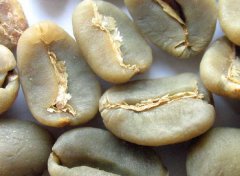
The way the sieve is graded is by the size of the green coffee beans. Fine coffee
The method of sieve classification is the method of classifying green coffee beans according to their size. Raw beans are passed through a perforated iron sieve to determine the size of the beans and thus the grade. The hole size unit of the screen is 1/64 inch (less than 0.4mm), so the number of screens indicates that there are several 1/64 inches, such as the size of the 17th screen is 17/64 inches, about 6.75mm, so the screen
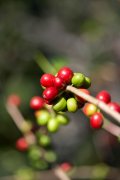
The way of sieve grading is to grade according to the size of raw coffee beans. The raw bean passes through the iron with holes.
The way of grading according to the screen is the method of grading according to the size of raw coffee beans. Raw beans are graded by determining the size of the beans through a holed iron plate sieve. The size of the hole in the screen is 1x64 inches (less than 0.4mm), so the size of the screen indicates that there are several screens with a size of 64 inches. For example, the size of the screen size 17 is 17thumb 64 inches, which is about 6.75mm, so the screen
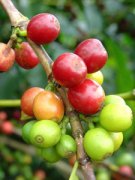
Boutique coffee is classified according to sieve grade.
The way of grading according to the screen is the method of grading according to the size of raw coffee beans. Raw beans are graded by determining the size of the beans through a holed iron plate sieve. The size of the hole in the screen is 1x64 inches (less than 0.4mm), so the size of the screen indicates that there are several screens with a size of 64 inches. For example, the size of the screen size 17 is 17thumb 64 inches, which is about 6.75mm, so the screen

Coffee Raw Bean sieve grading Table (SCREEN SIZING)
Coffee is produced in more than 50 countries in the world, and different standards of raw bean classification have been derived, of which the most basic common classification method is the Screen Sizing classification method based on the particle size of raw coffee beans. The raw beans to be graded are put into the sieve plate and shaken continuously. Only the raw beans whose particles are larger than the pore diameter are retained, and the rest fall down.

Basic screening of raw beans: how to classify the grades of raw coffee beans by the screening system of raw coffee beans
Communication of professional baristas Please follow the coffee workshop (official Wechat account cafe_style) it is obviously unrealistic to sift coffee beans by hand and visually. The coffee screen is equivalent to a measuring tool, so the accuracy of selection is a very important part. Many countries use sieve systems to grade raw coffee beans. The principle behind it is actually: compared to its

The concept of Fine Coffee Specialty Coffee (1)
The traditional classification of coffee beans is usually based on the classification criteria defined by the coffee producing countries, and then agreed to become common in the international market and traded under such a tacit understanding. For a long time, coffee producing countries have their own classification and evaluation criteria for coffee, which serve as the pricing guidelines in the coffee market. But slowly in recent years, coffee consuming countries have begun to demand unified evaluation criteria.

What are the classification standards of coffee beans G1, G2, G3, G4, AA, PB, SHB?
Professional coffee knowledge exchange More coffee bean information Please pay attention to coffee workshop (Weixin Official Accounts cafe_style)

Coffee Bean Classification Standard Coffee Bean AA17 What is the judgment of defective beans and ten categories
Each producing country has its own classification and rating charts, which are also commonly used to set minimum standards for exports. It has the best flavor. The size and size distribution of coffee beans also have an impact on the optimization of roasting conditions. Coffee beans in coffee-producing countries are often determined by the following factors: 1. Altitude 2. Region 3. Plant variety 4. Method of preparation (
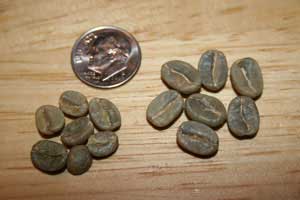
Knowledge points of Coffee Raw Bean: the concept of Fine Coffee Specialty Coffee (1)
The traditional classification of coffee beans is usually based on the classification criteria defined by the coffee producing countries, and then agreed to become common in the international market and traded under such a tacit understanding. For a long time, coffee producing countries have their own classification and evaluation criteria for coffee, which serve as the pricing guidelines in the coffee market. But slowly in recent years, coffee consuming countries have begun to demand unified evaluation criteria.
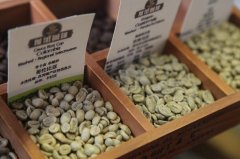
Grading system of major coffee producing countries in the world popular science coffee grade shb and coffee bean grade G1
Professional coffee knowledge exchange more coffee bean information please follow the coffee workshop (Wechat official account cafe_style) the latest coffee raw bean knowledge collation: coffee bean grading and naming rules want to drink a certain quality of selected coffee beans, starting from understanding the grading system of coffee-producing countries is a necessary lesson for each producing area, each piece of soil, different climate, different treatment methods
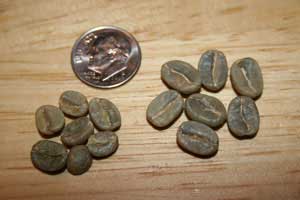
The concept of Fine Coffee Specialty Coffee (1) the third Wave of Coffee Culture and History in the World
The traditional classification of coffee beans is usually based on the classification criteria defined by the coffee producing countries, and then agreed to become common in the international market and traded under such a tacit understanding. For a long time, coffee producing countries have their own classification and evaluation criteria for coffee, which serve as the pricing guidelines in the coffee market. But slowly in recent years, coffee consuming countries have begun to demand unified evaluation criteria.
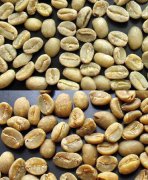
There are two methods for grading raw coffee beans in terms of sieve size, size
There are two ways to classify raw coffee beans, one is the filter number, and the other is the elevation. It is divided by the filter number, and the size is size in terms of the screen size. Round beans are generally smaller than flat beans, between 8-13 and 12-29. 8, 9, 10. 12, 13. 18. 29 = small, medium, ordinary. Quasi-big. Big, extra large. The bigger the size, the bigger the beans. Like SC-.
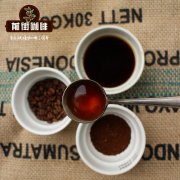
Kenya aa coffee features rich juice texture
Professional coffee knowledge exchange More coffee bean information Please pay attention to coffee workshop (Weixin Official Accounts cafe_style) Front Street-Kenya coffee grading introduction Kenya coffee mostly grows at an altitude of 1500--2100 meters, harvested twice a year. Its main characteristic is the distinct fruit fragrance, the common fruit fragrance is citrus. Kenyan coffee has a multi-layered flavor and juice

What does the number of items of coffee mean? what does it have to do with the coffee sieve?
Professional coffee knowledge exchange more coffee bean information please pay attention to the coffee workshop (Wechat official account cafe_style) according to the number of items, that is, according to the size of coffee beans to judge the quality of beans, and then quotation, usually starting from 14 items. Mesh, which is a unit of sieve hole diameter, does not describe the size of beans, but the width of beans can be judged according to the number of eyes. Specific purpose
Coffee beans are also divided into "aristocratic and poor classes".
Coffee quality Evaluation Coffee producing countries have their own grading methods and quality evaluation standards in order to grade their harvested coffee, of course, there are also famous coffee mochas. Like Yemen in Matali, there are no countries with uniform export specifications and no coffee culture of the same style. If there are common evaluation criteria for coffee producers all over the world, it will be convenient for buyers.

Coffee beans are also divided into "aristocratic and poor classes". Evaluation of the quality of coffee
Coffee quality Evaluation Coffee producing countries have their own grading methods and quality evaluation standards in order to grade their harvested coffee, of course, there are also famous coffee mochas. Like Yemen in Matali, there are no countries with uniform export specifications and no coffee culture of the same style. If there are common evaluation criteria for coffee producers all over the world, it will be convenient for buyers.

Coffee grading knowledge how to classify coffee grades
If the owners of two cafes are discussing, shopkeeper A says, "the coffee beans we use in our shop are NO.2 in Santos, Brazil. What about your store?" shopkeeper B said: our store uses Brazilian NO.1 of the same grade as Blue Mountain NO.1. The evaluation method adopted in Brazil is the deduction method, which is classified according to the number of defective beans per 300g of staple beans, with a total of seven grades from NO.2 to No.8, with a deduction of less than 4 points.

Coffee beans Basic knowledge Coffee classification
If there are two cafe owners in the discussion, A shop owner said: we use coffee beans in Brazil Santos NO.2, your shop? B shopkeeper said: We shop with the Blue Mountain NO.1 with the same level of Brazil NO.1. Brazil uses a point-deduction method to evaluate the quality of the beans. The beans are graded according to the number of defective beans in every 300 grams of main beans. The grades are divided into seven levels from NO.2 to NO.8. If the points are less than 4,

[practical information] how are coffee beans screened and graded?
Communication of professional baristas Please pay attention to the grading of coffee in the coffee workshop (Wechat official account cafe_style). If the owners of two cafes are discussing, owner A says: the coffee beans we use in our shop are NO.2 in Santos, Brazil. Where is your shop? B the shopkeeper said: our store uses Brazilian NO.1 of the same level as Blue Mountain NO.1. The evaluation method adopted in Brazil is the deduction method, according to every 300 grams.

Kenya AB Komatina Coffee Bean Information hand-flushed Kenya Cranberry Cooking parameters
Professional coffee knowledge exchange more coffee bean information please follow the coffee workshop (Wechat official account cafe_style) Kenya Komatina cranberry washing area: Mathira Guchuko beans: Arabica SL28 SL34 planting altitude 1830-1920 meters above sea level planting soil red volcanic soil rainfall: about 1200MM cup test score 86.5. flavor description: cranberry, coke